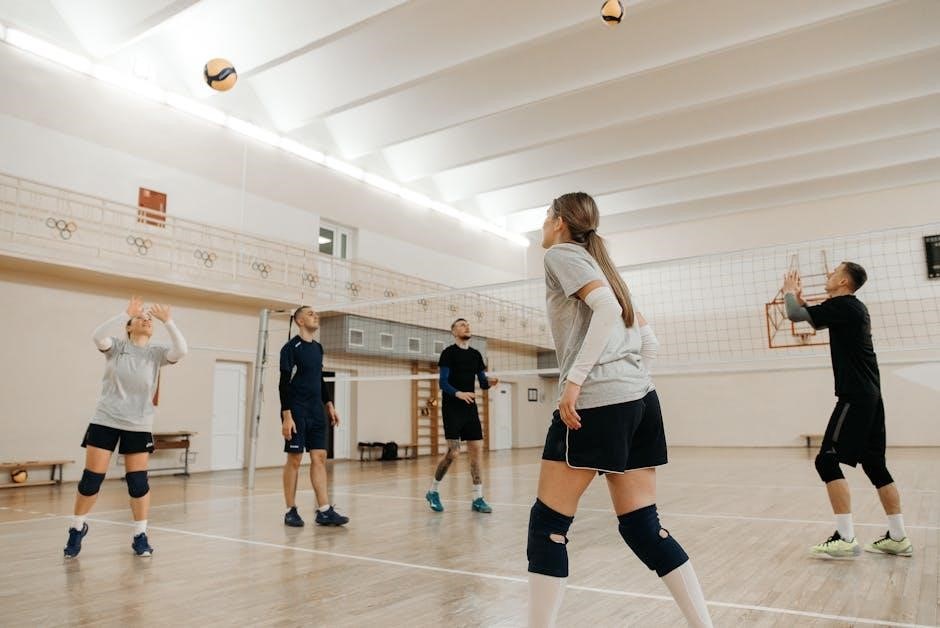
Volleyball Drills for Beginners: A Comprehensive Guide
Welcome! This guide provides accessible volleyball drills, perfect for newcomers. We’ll cover fundamental skills, practice plans, and resources – including printable PDFs – to elevate your game.
Embarking on your volleyball journey? This section introduces drills designed for absolute beginners, focusing on building a solid foundation. We understand starting can be daunting, so these exercises prioritize fundamental skill development over complex strategies. Expect a gradual progression, starting with individual work and evolving into partner and small-group activities.
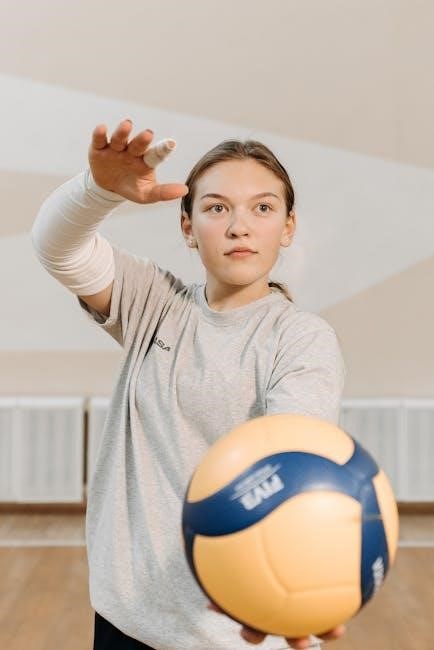
Our approach emphasizes proper technique and repetition. Many drills begin without a ball, concentrating on footwork and form. We’ll also point you towards valuable volleyball drills for beginners PDF resources, offering printable practice plans and visual aids. Remember, consistency and patience are key to improvement. The initial practice (around 60 minutes) should include an introduction and serving drills, aiming for at least 15 successful serves per player.
Understanding Fundamental Skills
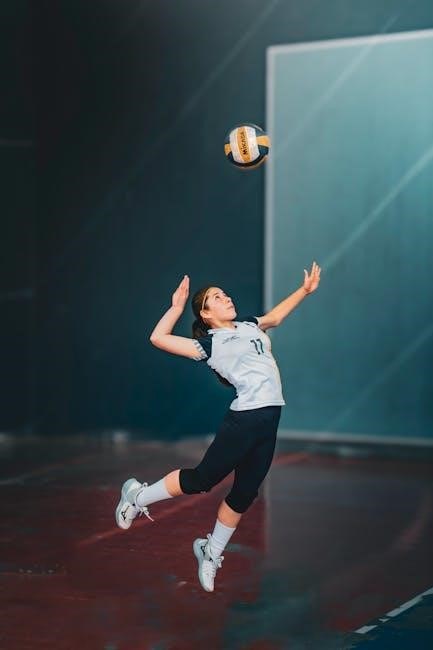
Mastering the basics is crucial. Volleyball hinges on a few core skills: serving, passing (bumping), setting, hitting (spiking), and blocking. Beginners often benefit from breaking down each skill into its component parts. For example, passing isn’t just about hitting the ball; it’s about proper platform formation, body positioning, and controlled movements.
We’ll explore drills specifically targeting each skill, with an emphasis on correct technique. Searching for volleyball drills for beginners PDF will reveal numerous resources detailing these fundamentals. Youth volleyball coaching guides often highlight skills and drills, providing structured practice plans. Remember, a strong foundation in these areas will unlock more advanced techniques later on, leading to greater success and enjoyment.
Passing/Bump Drills
Developing a solid pass is paramount. Passing, or bumping, is the first contact, setting the stage for the attack. Beginner drills focus on forming a stable platform with forearms, maintaining a low center of gravity, and directing the ball accurately. Searching online for volleyball drills for beginners PDF yields excellent resources.
Common drills include self-toss and bump, partner bumping, and wall passing. These exercises build muscle memory and refine technique. Youth volleyball coaching guides emphasize repetition. Focus on consistent platform angle and controlled movements. Mastering the bump allows for smoother transitions into setting and attacking phases of play, forming a strong base for team success.
Warm-up Drills (10-15 minutes)
Prioritize injury prevention with a dynamic warm-up. A proper warm-up prepares muscles for activity, increasing blood flow and flexibility. Begin with light cardio, like jogging or jumping jacks, for 2-3 minutes. Then, transition into dynamic stretches – arm circles, leg swings, torso twists – holding each for 1-2 seconds.
Many volleyball drills for beginners PDF resources detail effective warm-up routines. Include volleyball-specific movements like shoulder rotations and wrist flicks. A well-executed warm-up enhances performance and reduces the risk of strains or sprains. Dedicate 10-15 minutes to this crucial phase before any practice or game.
Dynamic Stretching for Volleyball
Focus on movement-based stretches to prepare for volleyball’s demands. Include arm circles (forward & backward), leg swings (forward, sideways, & across the body), and torso twists. High knees and butt kicks are excellent for warming up leg muscles. Walking lunges with a twist enhance flexibility and core stability.
Volleyball drills for beginners PDF guides often showcase these stretches. Avoid static stretching before activity; dynamic stretches are key. Perform each stretch for 10-15 repetitions. This prepares muscles, increases range of motion, and reduces injury risk. Remember to control movements and avoid bouncing.
Serving Drills (15-20 minutes)
Begin with foundational practice, focusing on consistent form. Start with underhand serves, emphasizing a smooth pendulum motion and contact point. Progress to target serving, aiming for specific zones on the court. Many volleyball drills for beginners PDF resources detail these steps.
Allocate time for repetition – at least 15 successful serves per player. Introduce a scoring system to add a competitive element. Focus on accuracy over power initially. Gradually increase distance as confidence grows. Proper technique is paramount; prioritize form over force. Consistent practice builds muscle memory and improves serve reliability.
Underhand Serve Practice
Mastering the underhand serve is crucial for beginners. Begin by holding the ball comfortably in your non-dominant hand, extending it slightly forward. Your dominant hand forms a flat surface, contacting the ball’s lower portion. Swing like a pendulum, keeping your arm straight and following through towards your target. Volleyball drills for beginners PDF guides often illustrate this.
Focus on consistent contact and a smooth motion. Practice serving from different distances, gradually increasing the challenge. Emphasize a relaxed arm swing and proper body positioning. Repetition is key – aim for at least 20 successful serves. Correct any inconsistencies in form immediately to build good habits.
Target Serving Drill
Elevate serving accuracy with the target drill. Place cones, hoops, or marked zones on the court to designate specific targets. Players attempt to serve the ball directly into these targets, increasing difficulty with smaller zones. Volleyball drills for beginners PDF resources often detail target placement suggestions.
This drill enhances focus and control. Encourage players to visualize their serve trajectory before each attempt. Track success rates to monitor improvement and identify areas needing refinement. Vary target locations to challenge players’ adaptability. This drill builds confidence and precision, essential for consistent serving performance.
Passing/Bumping Drills (20-25 minutes)
Mastering the bump is crucial for beginners. These drills focus on proper form and control. Volleyball drills for beginners PDF guides emphasize a stable base, angled platforms, and consistent contact. Start with self-tosses, focusing on directing the ball upwards. Progress to partner bumping, maintaining a rhythmic exchange.
Introduce the triangle passing drill for dynamic movement. Players form a triangle, passing the ball sequentially. This enhances reaction time and spatial awareness. Emphasize communication and quick footwork. Consistent practice builds muscle memory and improves passing accuracy, forming a solid foundation for more advanced skills.
Partner Bumping Drill
This foundational drill, often detailed in volleyball drills for beginners PDF resources, involves two players facing each other. One player gently tosses the ball to their partner, who then performs a forearm pass (bump). Focus on creating a stable platform with angled forearms and contacting the ball consistently.
Beginners should prioritize control over power. Encourage soft hands and a smooth upward motion. Gradually increase the distance between partners as skill improves. PDF guides often suggest starting with 5-10 repetitions per set, then increasing. This drill builds fundamental passing technique and hand-eye coordination.
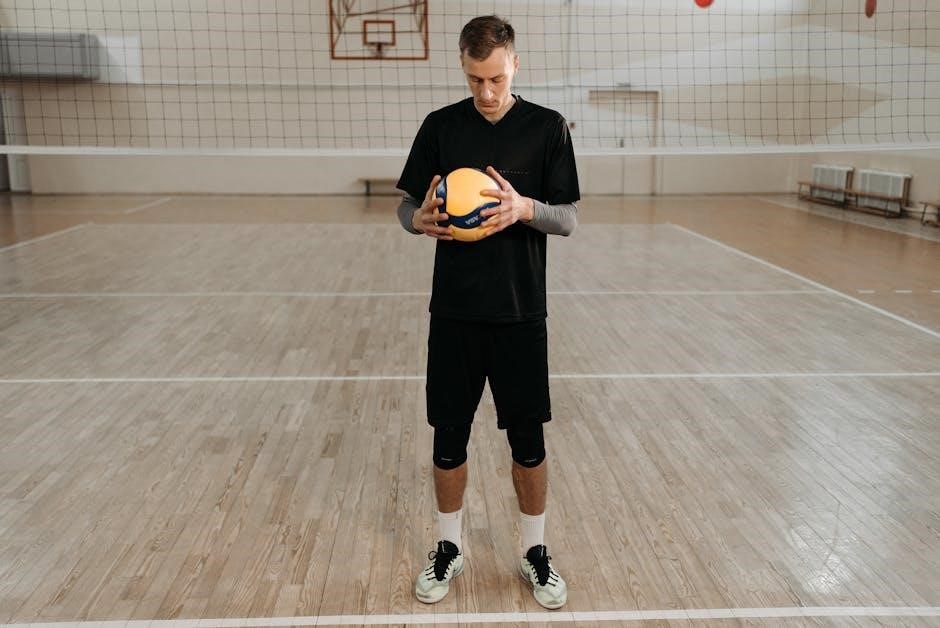
Triangle Passing Drill
Frequently found in volleyball drills for beginners PDF guides, this drill utilizes three players forming a triangle. Players pass the ball to each other in a specific sequence, focusing on accurate forearm passes and controlled touches. The goal is to maintain a consistent rhythm and improve passing accuracy within a dynamic setting.
Beginners should start with a larger triangle and slower passes, gradually decreasing the space and increasing the speed. PDF resources often recommend emphasizing communication and calling for the ball. This drill enhances passing skills, spatial awareness, and teamwork – crucial for beginners.
Setting Drills (15-20 minutes)
Setting drills, commonly detailed in volleyball drills for beginners PDF resources, are vital for developing accurate ball control and offensive coordination. These drills typically focus on proper hand positioning – forming a triangle with the fingers – and consistent release points. Beginners should prioritize soft hands and a smooth upward motion.
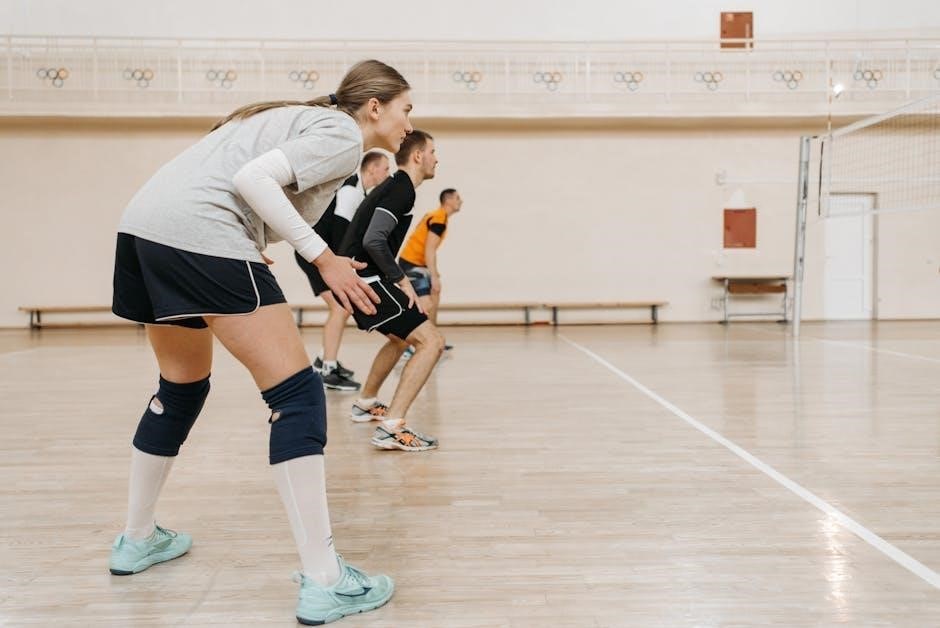
PDF guides often suggest starting with stationary setting, then progressing to setting while moving. Drills emphasize setting to a target, improving precision and predictability. Mastering setting is fundamental for building a successful volleyball offense, and consistent practice is key for beginners.
Wall Setting Drill
The Wall Setting Drill, frequently found in volleyball drills for beginners PDF guides, is an excellent solo practice method. Players stand a few feet from a wall and practice setting the ball against it, focusing on consistent form and hand positioning. This drill builds muscle memory and allows for repetition without needing a partner.
PDF resources recommend varying the distance from the wall to challenge players. Focus on a high, consistent set with proper finger spread and a quiet hand action. This drill helps refine technique and build confidence before incorporating movement. It’s a foundational exercise for all beginner setters.
Partner Setting Drill ― Hand Positioning
Many volleyball drills for beginners PDF resources emphasize proper hand positioning during setting. This partner drill focuses specifically on that. Players face each other, a few feet apart, and practice setting to their partner. The key is forming a triangle with your thumbs and index fingers, creating a stable platform for the ball.
PDF guides often suggest verbal cues like “hands like a window.” Focus on a soft touch and extending through the ball. Avoid slapping or carrying the ball. This drill builds coordination and reinforces correct technique, crucial for accurate setting. Consistent practice improves control and consistency.
Introducing hitting drills for beginners requires a phased approach, often detailed in volleyball drills for beginners PDF guides. Initially, focus on the approach footwork without a ball. This builds muscle memory for the proper steps – a four-step approach is common. Emphasize a smooth, coordinated movement, ending with a powerful jump.
PDF resources highlight the importance of arm swing mechanics, but that comes later. For now, concentrate on the approach. Coaches often use visual cues and repetition. Gradually introduce a ball, starting with tossing and swinging, then progressing to a full spike. Safety is paramount; ensure adequate space.
Approach Footwork Drill (No Ball)
This drill, frequently found in volleyball drills for beginners PDF guides, establishes the foundation for a successful spike. Players begin with a designated starting point and practice the four-step approach: a preparatory step, two gathering steps, and a powerful jump step. Focus on rhythm and coordination, ensuring each step is deliberate and contributes to upward momentum.
Coaches emphasize a consistent stride length and a smooth transition between steps. PDF resources often include diagrams illustrating proper foot placement. Players should practice approaching from various positions relative to the net. Repetition is key; aim for multiple sets of approaches, focusing on technique over speed initially.
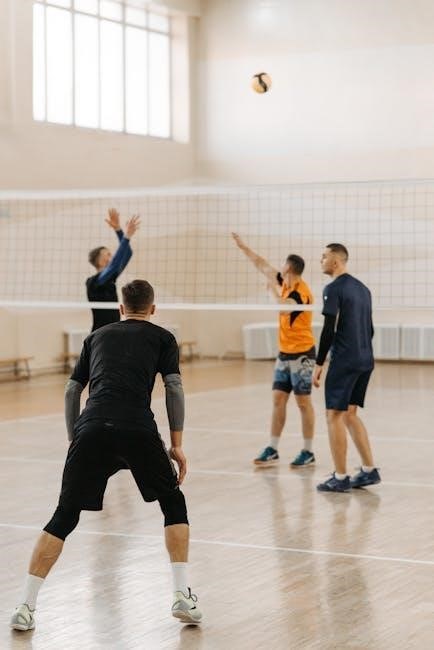
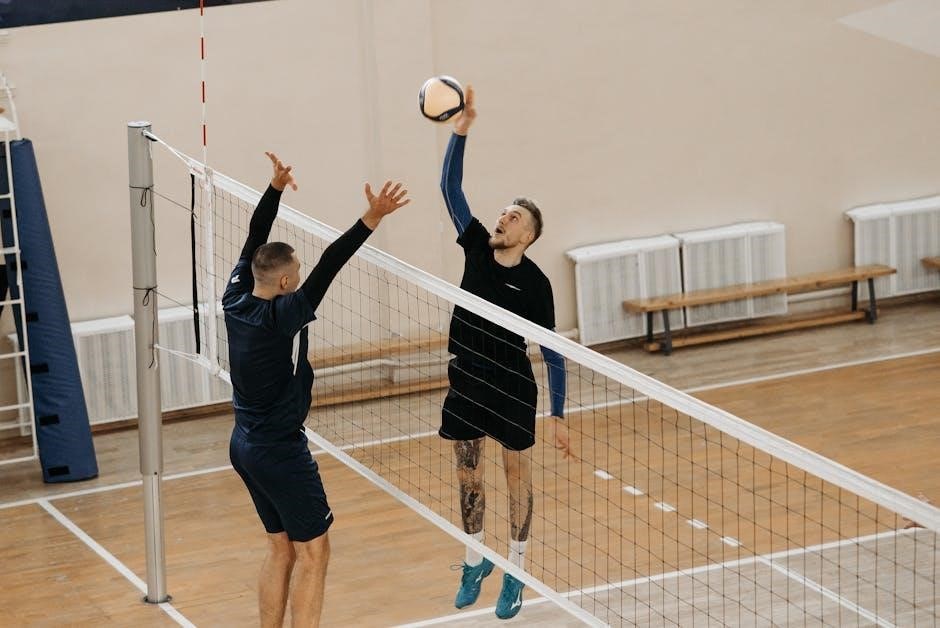
Blocking, often detailed in beginner volleyball drills PDF resources, is a crucial defensive skill. This introductory drill focuses on footwork and hand positioning without a live attacker. Players practice shuffling laterally along the net, maintaining an athletic stance with hands extended above the net. Emphasis is placed on quick, reactive steps and forming a solid wall with arms straight and fingers spread.
PDF guides frequently illustrate proper hand shape – a firm, angled position to deflect the ball. Coaches should stress penetration – reaching over the net without touching it. Start slowly, focusing on form, then gradually increase speed. This drill builds the foundation for more advanced blocking techniques.
Footwork and Hand Position Drill (No Ball)
Many beginner volleyball drills PDFs highlight the importance of proper footwork and hand positioning for effective blocking. This drill isolates these elements. Players begin in a ready position facing the net. Coaches call out directions – “left,” “right,” or “middle” – prompting quick lateral shuffles. Hands extend upwards, mimicking a block, with thumbs and index fingers forming a triangle.
Focus is on maintaining a low center of gravity and reacting swiftly to the coach’s cues. PDF resources often show diagrams illustrating correct hand and arm angles. Repetition is key; aim for 3 sets of 10-15 repetitions per direction. This drill builds muscle memory and prepares players for live blocking scenarios.
Defensive Drills (10-15 minutes)
Defensive skills are crucial, and many beginner volleyball drills PDFs emphasize reactive movement. These drills focus on agility and quick reactions. The Shuffle Step Drill is foundational, improving lateral movement speed – essential for covering the court. PDF guides often detail proper stance: low center of gravity, weight balanced, and hands ready.
Another drill involves reacting to visual cues; a coach points in a direction, and players shuffle to cover that area. Focus on maintaining a wide base and quick footwork. These drills build anticipation and court awareness. Consistent practice, as outlined in many PDFs, is vital for developing solid defensive habits.
Shuffle Step Drill
The Shuffle Step Drill, frequently detailed in beginner volleyball drills PDFs, is a cornerstone of defensive training. Players start in a ready position and shuffle laterally across a designated area (typically half the court). Emphasis is on maintaining a low center of gravity, bent knees, and quick, controlled steps. Arms should be out, ready to react.
PDF resources often suggest variations – adding a coach’s signal to change direction, or incorporating a ball for reactive digs. Focus on short, choppy steps, avoiding crossing the feet. Proper form is paramount; prioritize technique over speed initially. Consistent repetition builds muscle memory and improves agility, crucial for effective court coverage.
Transition Drills (10-15 minutes)
Transition drills, commonly found in beginner volleyball drills PDFs, focus on swiftly switching between offense and defense. These drills emphasize quick reactions and efficient movement. A key drill is “Serve Receive to Set,” where players practice receiving a serve, transitioning to a set position, and delivering a set to a designated hitter.
PDF guides often detail variations, adding a simulated attack after the set. Communication is vital; players should call for the ball and indicate their target. Focus on smooth, rapid transitions, minimizing wasted movement. These drills build teamwork and prepare players for the dynamic flow of a real game.
Serve Receive to Set Transition
This drill, frequently detailed in beginner volleyball drills PDFs, simulates a realistic game scenario. Players begin in serve receive formation, focusing on controlled passing to the setter. The setter then transitions quickly to the setting position, aiming for a consistent and accurate set. PDF resources emphasize proper footwork – a quick shuffle step after the pass is crucial.
Communication is paramount; passers call “pass!” and setters announce “set!”. Coaches often incorporate a simulated hitter to add pressure. Focus on speed and accuracy, minimizing errors. Repetition builds muscle memory and improves team coordination, preparing players for game-like situations.
Game-Like Scenarios (15-20 minutes)
Transitioning to game-like drills, often found in beginner volleyball drills PDFs, is vital for skill application. The 2 vs 2 drill is a fantastic starting point. Players work on all fundamental skills – serving, passing, setting, and hitting – in a simplified competitive environment. PDF guides suggest limiting the court size initially to increase touches and repetitions.
Focus on strategic play, like identifying open spaces and utilizing different hitting angles. Encourage communication and teamwork. Coaches can modify rules, such as requiring a set before a hit, to emphasize specific skills. These scenarios build confidence and prepare players for full-court gameplay.
2 vs 2 Volleyball Drill
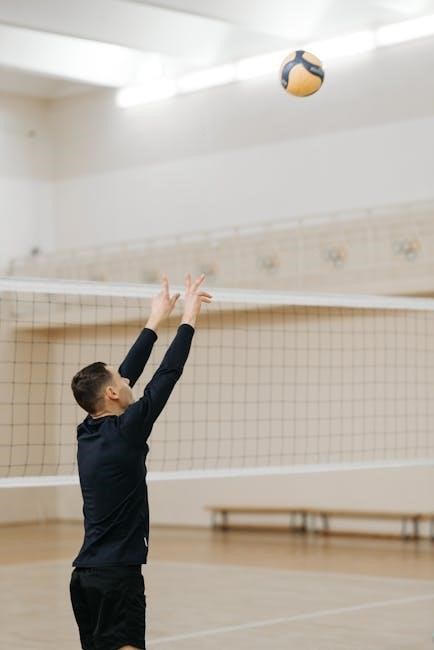
The 2 vs 2 drill, frequently detailed in beginner volleyball drills PDFs, is a cornerstone for developing all-around players. Divide players into two teams on a reduced court – typically half a volleyball court. Focus on controlled serving to initiate play, followed by passing, setting, and attacking. PDF resources emphasize keeping rallies short initially, prioritizing accurate technique over power.
Rotate positions regularly to ensure everyone practices each skill. Encourage communication between teammates. Coaches can introduce scoring (e.g., rally scoring to 11) to add a competitive element. This drill enhances decision-making, court awareness, and teamwork skills in a manageable setting.

Cool-down and Static Stretching (5-10 minutes)
A proper cool-down, often outlined in beginner volleyball drills PDFs, is crucial for recovery and injury prevention. Begin with light cardio, like a slow jog or walk, for 2-3 minutes to gradually lower heart rate. Follow this with static stretches, holding each stretch for 20-30 seconds. Focus on major muscle groups used in volleyball: shoulders, arms, back, legs, and core.
PDF guides recommend stretches like hamstring stretches, quad stretches, calf stretches, and shoulder rotations. Emphasize deep breathing during stretches to promote relaxation. This phase helps reduce muscle soreness and improve flexibility, preparing players for future practice sessions.
Drill Progression for Beginners
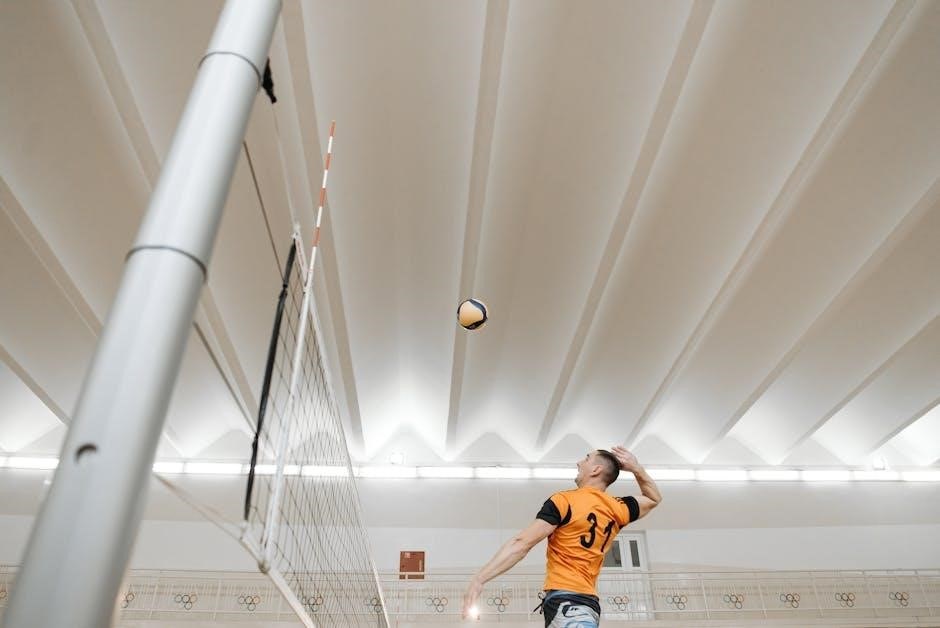
Beginner volleyball drills, often detailed in downloadable PDFs, should follow a logical progression. Start with isolated skill work – passing to a target, underhand serving practice – focusing on form. Gradually introduce complexity, like partner drills for bumping and setting, increasing the distance and speed. Then, integrate skills with simple game-like scenarios, such as 2 vs 2 drills.
PDF resources emphasize building a foundation before advancing. Avoid overwhelming beginners with complex rotations or advanced techniques. Focus on repetition and positive reinforcement. As players gain confidence, introduce more challenging drills, always prioritizing proper technique over speed or power.
Common Mistakes and Corrections
Beginner volleyball drills, often outlined in PDF guides, frequently reveal common errors. In passing, watch for “swinging” at the ball – correct by forming a flat platform. Serving errors often stem from inconsistent tosses; emphasize a stable, repeatable motion. Setting mistakes include incorrect hand shape (fingers splayed, not cupped) and pushing the ball instead of extending.
PDF resources highlight the importance of immediate correction. Provide clear, concise feedback, focusing on one issue at a time. Demonstrate the correct technique and encourage repetition. Positive reinforcement is key; celebrate small improvements to build confidence and encourage continued learning.
Passing Errors & Fixes
Many beginner volleyball drills, detailed in PDF guides, focus on passing, yet common errors persist. A frequent mistake is “swinging” – moving the arms like hitting. The fix: maintain a stable, flat platform with arms extended and together. Another error is bending at the waist instead of using the legs; emphasize a low, athletic stance.
PDFs often stress the importance of watching the ball all the way into the platform. Correcting this requires focused repetition. Encourage players to “angle” their platform to direct the pass accurately. Consistent feedback and demonstration are crucial for developing proper passing technique and building confidence.
Serving Errors & Fixes
Beginner volleyball drills, often found in downloadable PDFs, frequently address serving. A common error is inconsistent toss height – too high or too low. The fix: practice a smooth, controlled toss directly in front of the hitting shoulder. Another frequent mistake is a lack of follow-through, resulting in weak serves.
PDF resources emphasize contacting the ball with the heel of the hand for underhand serves. Correcting this requires visual cues and repetition. Players should also avoid “short-arming” the serve, ensuring a full arm swing. Consistent practice and focused feedback are vital for improving serving accuracy and power.
Resources for Printable Volleyball Drills (PDFs)
Numerous websites offer free volleyball drills in PDF format, ideal for beginner coaches and players. Websites like TeamSnap and Active.com provide comprehensive drill collections categorized by skill level and focus. These PDFs often include diagrams and detailed instructions, making them easy to follow.
Searching “youth volleyball drills PDF” yields many results, including guides from USA Volleyball and various coaching clinics. These resources typically cover warm-ups, passing, setting, serving, and basic hitting drills. Utilizing these printable materials streamlines practice planning and ensures a structured learning experience for beginners.
Creating a Beginner Volleyball Practice Plan
A successful beginner practice plan (around 60-90 minutes) should prioritize fundamental skill development. Start with a 10-15 minute warm-up, incorporating dynamic stretching. Dedicate 15-20 minutes to serving drills, focusing on underhand technique and target accuracy. Allocate 20-25 minutes to passing/bumping, utilizing partner and triangle drills.
Follow with 15-20 minutes of setting practice, emphasizing hand positioning and wall drills. Introduce hitting with approach footwork (no ball initially). Conclude with 10 minutes of cool-down and static stretching. Printable drill PDFs can be integrated to provide structure and visual aids throughout the session.
Adapting Drills for Different Skill Levels
Beginner drills, often found in printable PDFs, require modification as players progress. For those struggling with passing, reduce the distance or use larger, softer balls. Increase the challenge by introducing movement or requiring specific target areas. In serving, progress from stationary tosses to self-tosses, then full approaches.
For more advanced beginners, incorporate game-like scenarios like 2 vs 2 drills. Adjust the complexity of setting drills, demanding quicker reactions and precise placement. Focus on transitioning smoothly between skills, mirroring game situations. Continual assessment and adaptation are key to maximizing learning.
Safety Considerations for Beginner Drills
Prioritize a safe learning environment when implementing volleyball drills, especially those found in beginner PDFs. Ensure ample space, free from obstructions, to prevent collisions during movement drills like shuffle steps. Proper warm-up and cool-down routines are crucial to minimize muscle strains and injuries.
Emphasize correct technique from the start to avoid developing bad habits that could lead to overuse injuries. Supervise drills closely, offering immediate feedback on form. Encourage players to communicate and be aware of their surroundings. Hydration is also vital – frequent water breaks are essential!
Equipment Needed for Beginner Volleyball Drills
Starting volleyball drills doesn’t require extensive, expensive equipment. A properly inflated volleyball is, of course, essential! Beginner drill PDFs often focus on skills achievable with minimal gear. Cones or markers are helpful for setting boundaries and creating drill stations, enhancing spatial awareness.
A volleyball net is beneficial, but initially, wall setting and partner drills can be performed without one. Comfortable athletic clothing and supportive athletic shoes are vital for safe movement. Consider a first-aid kit for minor injuries. Access to printable drill guides (PDFs) streamlines practice planning and execution.