
Literacy development unfolds through crucial stages, shaping skills and understanding from early childhood onward. Targeted instruction, recognizing practical application, and enthusiasm are key.
The Evolving Landscape of Literacy
The definition of literacy is constantly expanding beyond traditional reading and writing skills. Today’s learners require abilities to navigate digital environments, critically evaluate online information, and communicate effectively across various platforms. This shift necessitates a reimagining of literacy instruction, moving beyond phonics and comprehension to encompass digital literacy, media literacy, and information literacy.
Educators must adapt to these changes, integrating technology and diverse texts into their lessons. Fostering a love for reading remains vital, but it must be coupled with the skills needed to thrive in a rapidly evolving information age. Recognizing the communicative value of writing, and encouraging enthusiasm in literacy activities, are paramount for success.
The Importance of Targeted Instruction
Effective literacy instruction isn’t one-size-fits-all; it demands a targeted approach based on individual student needs and developmental stages. Understanding the five key phases of literacy development – emergent, early, transitional, fluent, and advanced – allows educators to provide tailored support. This means assessing students’ strengths and weaknesses, and then designing lessons that address specific skill gaps.
Targeted instruction might involve focusing on phonics for struggling decoders, or challenging advanced readers with complex texts. Integrating a variety of instructional activities, and recognizing the practical application of skills, are crucial. Ultimately, personalized learning pathways maximize each student’s potential for literacy success.

Stage 1: Emergent Literacy (Birth to Pre-K)
This foundational stage emphasizes phonological awareness, vocabulary building through exposure, and cultivating print awareness alongside concepts of the book.
Foundational Skills: Phonological Awareness
Developing robust phonological awareness is paramount during emergent literacy. This involves recognizing and manipulating the sounds within words – a crucial precursor to decoding. Activities should focus on rhyming, alliteration, segmenting, and blending sounds. Educators can utilize playful exercises like clapping out syllables, identifying initial sounds in words, and engaging children in oral language games.
Explicitly teaching these skills lays the groundwork for future phonics instruction. Consistent practice and varied approaches are essential to cater to diverse learning styles. Furthermore, integrating phonological awareness into daily routines, such as singing songs and reading aloud, reinforces these foundational skills in a natural and engaging manner, fostering a love for language and preparing children for the challenges of reading and writing.
Building Vocabulary Through Exposure
A rich vocabulary is inextricably linked to reading comprehension and overall literacy success. Expanding a child’s lexicon requires consistent and varied exposure to language; Read-alouds are incredibly effective, introducing children to new words within meaningful contexts. Conversations, both formal and informal, provide opportunities for vocabulary acquisition and usage.
Educators should intentionally select texts with diverse vocabulary and actively discuss unfamiliar words, providing definitions and examples. Encouraging children to ask questions and use new words in their own speech and writing solidifies their understanding. Furthermore, connecting vocabulary to real-world experiences enhances retention and demonstrates the practical application of language, fostering a lifelong love of learning.
Print Awareness and Concepts of Book
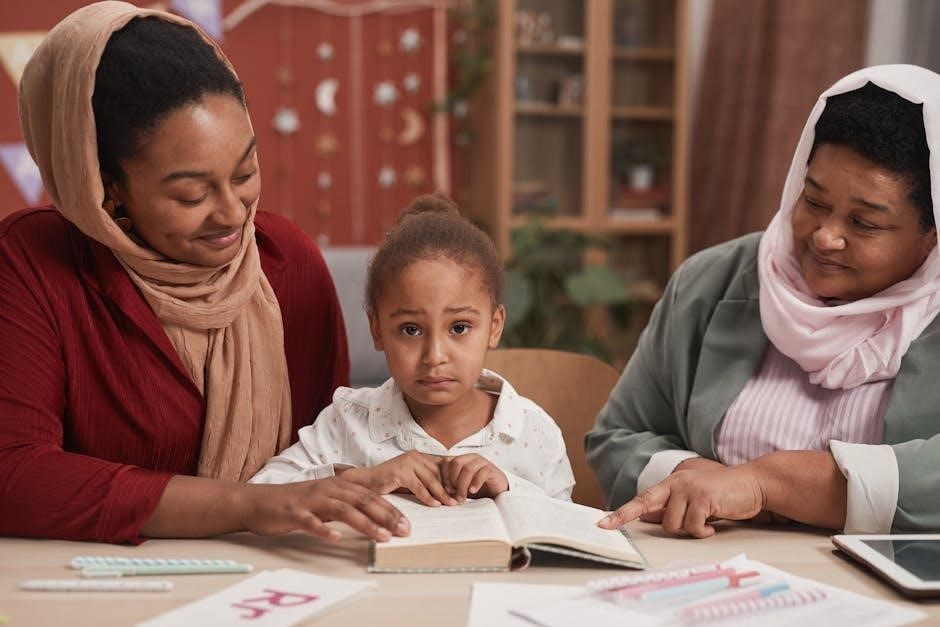
Developing print awareness is a foundational step in literacy development, establishing a crucial understanding of how print works. Children need to grasp concepts like the directionality of print – reading from left to right and top to bottom – and the distinction between letters and words. Recognizing the front and back of a book, understanding the role of the author and illustrator, and knowing how to handle a book properly are also vital.
Educators can foster print awareness through interactive read-alouds, pointing out print features and encouraging children to track the text with their fingers. Labeling classroom objects and creating print-rich environments further reinforces these concepts, building a strong base for future reading success.
Stage 2: Early Reading (Kindergarten — 1st Grade)
This stage focuses on decoding skills, utilizing phonics and sight words, alongside fluency development through repeated reading practices for improved comprehension.
Decoding Skills: Phonics and Sight Words
Building a strong foundation in decoding is paramount during early reading. Phonics instruction systematically connects letters to sounds, enabling children to blend and segment words. This empowers them to tackle unfamiliar text independently. Simultaneously, mastering high-frequency sight words – words recognized instantly without sounding them out – accelerates reading fluency.
Effective lessons integrate both approaches. Activities might include blending sounds to form CVC (consonant-vowel-consonant) words, identifying digraphs and blends, and practicing reading sentences containing learned sight words. Regular review and reinforcement are crucial for solidifying these skills. Instructors can create engaging lesson plans that focus on these elements, encouraging read-aloud exercises to improve overall fluency and comprehension.
Fluency Development: Repeated Reading
Achieving fluency extends beyond simply decoding words; it involves reading accurately, at an appropriate pace, and with expressive prosody. Repeated reading is a highly effective technique for bolstering this crucial skill. This strategy involves students reading the same passage multiple times, aiming to improve speed and accuracy with each iteration.
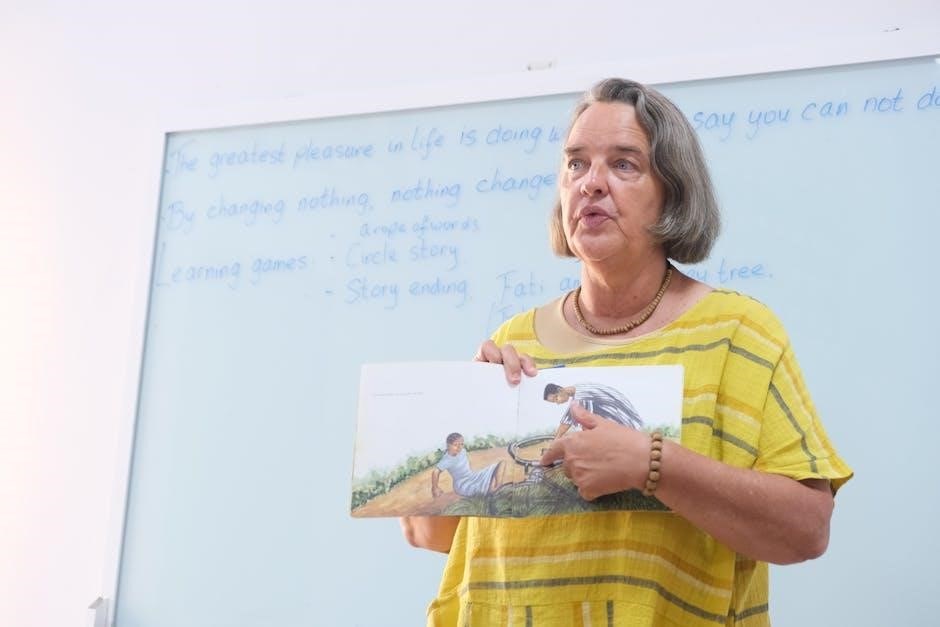
Initially, students may read with assistance, then independently, charting their progress. Focusing on a short passage allows for concentrated practice. Encouraging students to reread until they reach a desired words-per-minute rate fosters confidence and automaticity. Integrating read-aloud exercises alongside repeated reading further enhances fluency and comprehension, creating a positive and supportive learning environment.
Comprehension Strategies: Retelling and Questioning
Moving beyond decoding, comprehension is paramount; students must understand what they read. Retelling is a powerful strategy, prompting students to reconstruct the narrative in their own words, demonstrating understanding of plot, characters, and setting. Encourage detailed retellings, focusing on key events and sequencing.

Complementing retelling, strategic questioning deepens comprehension. Employ a variety of question types – literal, inferential, and evaluative – to challenge students’ thinking. Discussion and increased reading comprehension go hand-in-hand. Facilitate conversations around the text, encouraging students to justify their answers and make connections. This active engagement solidifies understanding and fosters critical thinking skills.

Stage 3: Transitional Reading (2nd ⏤ 3rd Grade)
Students expand vocabulary and background knowledge, transitioning to more complex texts through discussion and increased reading practice.
Expanding Vocabulary and Background Knowledge
As students progress into the transitional reading stage (2nd-3rd grade), a deliberate focus on expanding their vocabulary and building robust background knowledge becomes paramount. This isn’t simply about memorizing definitions; it’s about fostering a deep understanding of word relationships and how concepts connect to the wider world.
Effective strategies include read-alouds with rich discussions, exploring diverse texts across various genres, and explicitly teaching morphology – the study of word parts. Connecting reading material to students’ existing experiences and providing opportunities for them to explore new topics through research and hands-on activities are also crucial.
Furthermore, encouraging students to ask questions, make predictions, and summarize what they’ve read helps solidify their comprehension and vocabulary acquisition. A strong foundation in both vocabulary and background knowledge empowers students to tackle increasingly complex texts with confidence and understanding.
Developing Reading Comprehension Skills
Building upon foundational skills, the transitional reading stage (2nd-3rd grade) necessitates a concentrated effort on developing sophisticated reading comprehension strategies. Moving beyond simply decoding words, students must learn to actively engage with the text, construct meaning, and monitor their understanding.
Key techniques include teaching students to identify the main idea, make inferences, draw conclusions, and visualize scenes from the story. Encouraging discussions about characters’ motivations, plot developments, and the author’s message fosters critical thinking.
Strategies like reciprocal teaching – where students take turns leading discussions – and graphic organizers help students internalize these skills. Explicitly modeling comprehension strategies and providing ample opportunities for practice are essential for fostering independent, thoughtful readers. Ultimately, strong comprehension skills unlock deeper engagement with literature.
Transitioning to More Complex Texts
As students progress from transitional to fluent reading (4th-5th grade), a crucial next step involves skillfully navigating increasingly complex texts. This transition demands more than just decoding proficiency; it requires students to grapple with longer sentences, sophisticated vocabulary, and intricate plot structures.
Educators should introduce texts with varied genres, including informational reports, historical fiction, and poetry, to broaden students’ reading experiences. Explicit instruction on text features – such as headings, subheadings, and illustrations – helps students understand the organization of information.
Furthermore, teaching students to analyze text structure and author’s purpose empowers them to become active, critical readers. Providing scaffolding, such as pre-reading discussions and guided reading sessions, supports students as they encounter challenging material, fostering confidence and comprehension.

Stage 4: Fluent Reading (4th ⏤ 5th Grade)
Independent reading and thoughtful book choices are paramount, alongside analyzing text structure and author’s intent, to cultivate critical thinking abilities.
Independent Reading and Book Choice
Fostering a love of reading is central to this stage, and providing students with agency in their book selections is incredibly impactful. Allowing fourth and fifth graders to choose books that genuinely interest them dramatically increases engagement and motivation. This self-directed reading practice builds fluency, expands vocabulary organically, and deepens comprehension skills.
Teachers should curate classroom libraries with diverse genres and reading levels, ensuring accessibility for all learners. Guiding students to find “just right” books – those that offer a challenge without being frustrating – is crucial. Encourage discussions about chosen texts, allowing students to share their thoughts and interpretations. This empowers them to become active, independent readers who view reading not as a chore, but as a pleasurable and enriching experience.
Analyzing Text Structure and Author’s Purpose
Moving beyond simply decoding words, students in the fourth and fifth grades begin to dissect how texts are constructed and why authors make specific choices. Explicit instruction in identifying common text structures – such as compare and contrast, cause and effect, or problem and solution – provides a framework for understanding the information presented.
Equally important is exploring author’s purpose: to inform, to persuade, to entertain, or to express. Students learn to recognize clues within the text that reveal the author’s intent. Analyzing these elements enhances comprehension, encourages critical thinking, and prepares students to become discerning readers capable of evaluating information effectively. This analytical skillset is foundational for success in all academic disciplines.
Developing Critical Thinking Skills
As students progress to fluent reading, literacy instruction must actively cultivate critical thinking abilities. This involves moving beyond surface-level comprehension to engage in deeper analysis and evaluation of texts. Students learn to question assumptions, identify biases, and consider multiple perspectives.
Activities such as debates, Socratic seminars, and argumentative writing assignments encourage students to formulate reasoned judgments and support their claims with evidence from the text. Furthermore, exploring complex themes and challenging narratives fosters intellectual curiosity and the ability to think independently. These skills are not only essential for academic success but also for informed citizenship and lifelong learning.

Stage 5: Advanced Reading (6th Grade and Beyond)
Advanced readers utilize literacy to learn from content areas, honing inference skills and evaluating information sources with discerning judgment.
Content Area Literacy: Reading to Learn
As students progress to sixth grade and beyond, the focus of reading shifts dramatically. It transitions from learning to read, to reading to learn. This requires a sophisticated skillset beyond basic decoding and comprehension. Students must now navigate complex texts across all subject areas – science, social studies, mathematics, and the arts – extracting information, analyzing concepts, and synthesizing knowledge.
Effective content area literacy instruction involves teaching students specific strategies for tackling these challenges. This includes pre-reading activities to activate prior knowledge, note-taking techniques to organize information, and methods for identifying key ideas and supporting details. Furthermore, students need to learn how to evaluate the credibility of sources and differentiate between fact and opinion. Ultimately, the goal is to empower students to become independent, lifelong learners capable of accessing and utilizing information from a wide range of disciplines.
Inference and Interpretation Skills
Moving beyond literal comprehension, advanced readers must skillfully construct meaning that isn’t explicitly stated in the text. This demands robust inference and interpretation skills – the ability to “read between the lines” and draw logical conclusions based on textual evidence and prior knowledge. Students should be guided to identify clues within the text, consider the author’s purpose and perspective, and formulate well-supported interpretations.
Developing these skills involves engaging students in discussions that encourage them to justify their reasoning and consider alternative interpretations. Activities like analyzing character motivations, predicting outcomes, and identifying underlying themes are crucial. Furthermore, exposure to diverse genres and perspectives broadens students’ interpretive frameworks, fostering critical thinking and a deeper understanding of complex narratives and informational texts.
Evaluating Information and Sources
In the digital age, the ability to critically evaluate information is paramount. Next steps in literacy instruction must equip students with the skills to discern credible sources from misinformation. This involves teaching them to assess author expertise, identify potential biases, and examine the evidence presented. Students should learn to cross-reference information, verify claims, and understand the importance of source reliability.
Instruction should focus on recognizing different types of sources – scholarly articles, news reports, websites – and their respective strengths and weaknesses. Analyzing website domains, checking publication dates, and identifying sponsoring organizations are essential skills. Ultimately, fostering a skeptical yet informed mindset empowers students to become responsible consumers and producers of information, navigating the complexities of the modern information landscape.

Integrating Literacy Across the Curriculum
Effective literacy integration involves utilizing writing to enhance development, and leveraging technology for engaging activities across all subjects.
The Role of Writing in Literacy Development
Writing is not merely a consequence of reading proficiency, but a vital component intrinsically linked to the entire literacy development process. It reinforces decoding skills, expands vocabulary, and deepens comprehension as students actively construct meaning through their own expression. Encouraging students to write short notes, messages, or even stories allows them to understand the communicative value of written language, solidifying their understanding of its practical application in everyday situations.
Furthermore, the act of writing necessitates a conscious application of phonological awareness and grammatical structures, strengthening these foundational skills. Providing opportunities for varied writing experiences – from creative storytelling to informative reports – fosters a more holistic and robust literacy foundation, preparing students for increasingly complex academic challenges and lifelong learning.
Utilizing Technology to Enhance Literacy
Technology offers a dynamic and versatile toolkit for augmenting literacy instruction, catering to diverse learning styles and fostering engagement. Interactive e-books, literacy apps, and online reading platforms provide access to a vast library of texts, promoting independent reading and expanding vocabulary. Digital tools can also facilitate personalized learning experiences, adapting to individual student needs and pacing.
Furthermore, technology enables collaborative writing projects, peer feedback, and multimedia presentations, enhancing communication skills and creativity. Utilizing technology isn’t about replacing traditional methods, but rather supplementing them to create a richer, more immersive literacy environment. It’s about exhibiting enthusiasm for reading and writing in new, innovative ways.

Assessment and Differentiation
Effective literacy instruction necessitates ongoing assessment to monitor student progress and inform instructional decisions. Formative assessments, such as observations, running records, and quick checks for understanding, provide valuable insights into individual strengths and areas for growth. Summative assessments, like standardized tests and writing samples, offer a broader picture of achievement.
Differentiation is crucial to address the diverse needs of learners. This involves tailoring instruction to meet students at their current levels, providing scaffolding and support where needed, and offering challenging extensions for advanced learners. Recognizing the practical application of skills and fostering enthusiasm are vital components of a differentiated approach, ensuring all students experience success.